

Delivery Matters
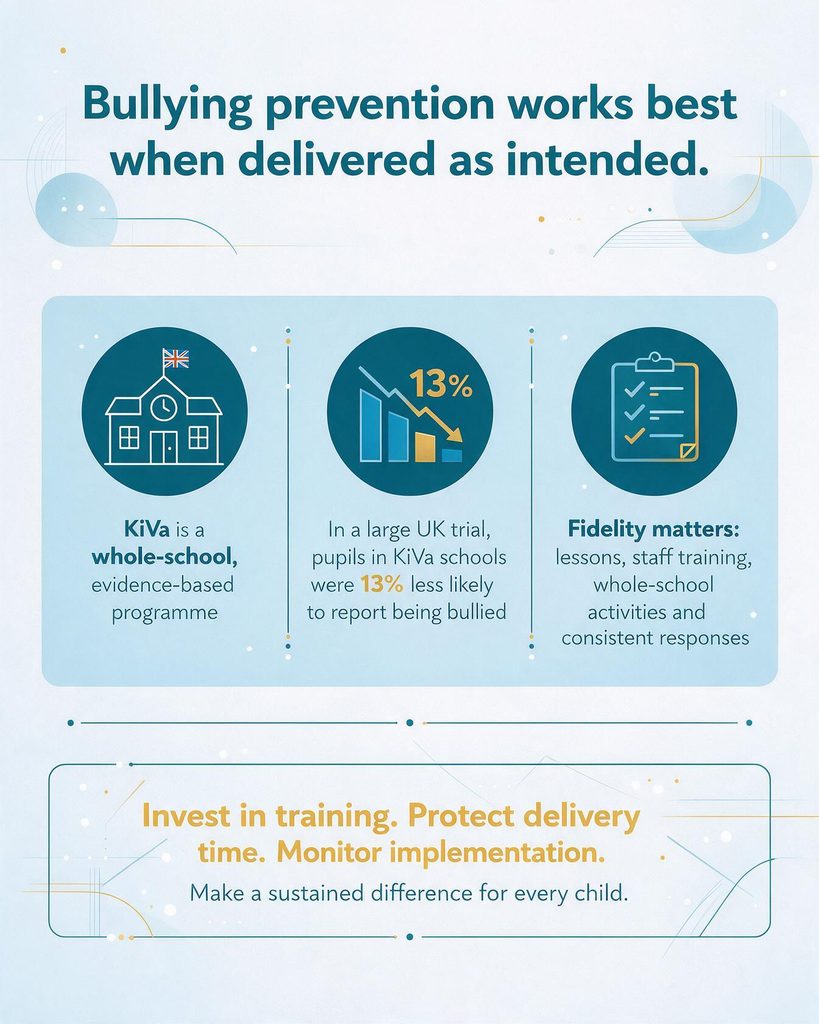
Many schools adopt evidence based programmes like KiVa, however outcomes vary widely when these programmes are delivered in the real world. Implementation fidelity – delivering a programme as it was designed ensures the delivery of the key concepts, core components and processes that have been evaluated to work, when the programme is delivered this way. Research into the KiVa programme indicates that HOW the programme is delivered – specifically by delivering manual content and consistent use of indicated actions protocols, are closely tied to the benefits schools experience for pupils.
KiVa is a whole school, evidence based bullying prevention programme developed in FInland, with universal content (manualised lessons, whole-school adoption) and indicated actions (structured responses to confirmed bullying cases). It is now being delivered in 31 countries worldwide and has been evaluated in large trials in Finland and in the UK, showing reductions in bullying and victimisation, with additional benefits such as pupils liking school, reduced anxiety and depression when the programme is delivered well.
Research indicates that the programme benefits come from the implementation of the programme in schools, not just the adoption of the programme by schools.
What ‘delivering with fidelity’ looks like in KiVa
Findings from Johander et al, (2021) indicate that the important elements for impactful delivery of the KiVa programme include:
Lesson adherence increases dose and exposure: Delivering the planned KiVa lessons and activities, in line with the manual ensures the intended content and components are delivered to pupils progressively and over time. The lessons and manuals build knowledge and skills through consistent delivery.
What do KiVa Teachers need to do? Higher lesson adherence and adequate preparation time are associated with greater reductions in victimisation at classroom level. Delivering enough of the lessons and lesson content over the year is key to ensure enough content is delivered for the programme to have impact.
What do KiVa Co-ordinators need to do? Whole-school elements: consistent use of school-wide actions, for example displaying posters and artwork, visible presence at breaktimes, whole school adoption and inclusion in staff meetings and trainings as set out in the programme
For KiVa, we know that the programme is effective in reducing instances of bullying in schools, when 60% plus of the content of the manualised content is delivered to classes over a year.
Johander et al (2021) examined how closely schools followed KiVa guidelines, which strategies they used in practice and what outcomes were obtained, finding that over time, some schools moved away from the recommended approaches in the manuals and started adapting or using their own methods. The evaluation found that effectiveness was not simply an outcome of how long the school had been running KiVa, how they used it mattered more. A fidelity to core structures, lesson delivery and using the KiVa team process was key to obtained the outcomes supported in the published research.
“it’s not just whether you run KiVa, but how consistently you follow its core processes – especially follow-up – that seems to drive results”
Information from:
Johander E, Turunen T, Garandeau CF, Salmivalli C. Different Approaches to Address Bullying in KiVa Schools: Adherence to Guidelines, Strategies Implemented, and Outcomes Obtained. Prev Sci. 2021 Apr;22(3):299-310. doi: 10.1007/s11121-020-01178-4. Epub 2020 Oct 24. Erratum in: Prev Sci. 2021 Jan 14;: PMID: 33098542; PMCID: PMC8032636.